
The Fate of Erika
The Glass RoomThis flow traces Werner Stahl’s concealed family tragedy and shows how personal grief becomes entangled with the eugenic ideology he serves.
increasing Bearing strength in each event
 decreasing
Bearing strength in each eventdecreasingA Marriage Under Pressure
Love and Family Prohibition
A cousin marriage
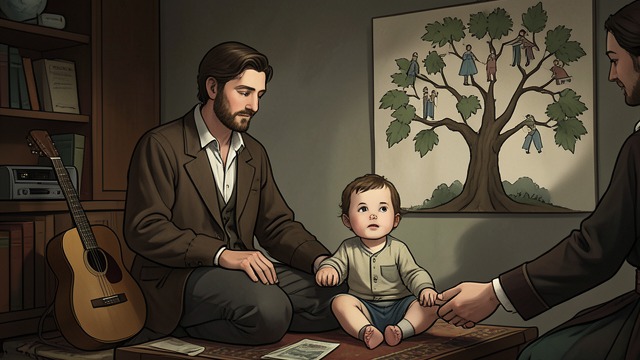
Werner Stahl explains that he married Hedda, his first cousin, despite family and religious objections. Their relationship was shaped by the belief that their love crossed a forbidden boundary.
He remembers Hedda as a brilliant musician and a close companion from childhood.
A hidden vulnerability
Their shared family history carries a recessive genetic mutation. The threat remains invisible until it appears in their daughter, demonstrating the limits of family confidence and medical certainty.
Erika’s First Months
A Child Begins to Change
Early joy
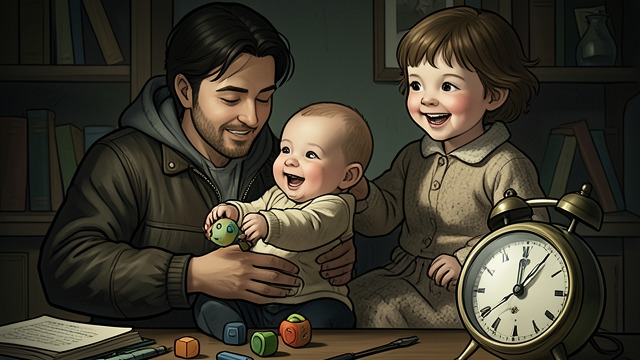
Erika is born as a healthy, beautiful baby, and her parents experience her as a fulfillment beyond music and marriage. Stahl remembers a period when she smiles, recognizes them, and reaches for toys.
The family’s early happiness makes the later decline feel both sudden and incomprehensible.
Development reverses
Erika gradually loses skills and responsiveness. The change resembles a clock running backward, turning ordinary developmental milestones into painful memories.
A Degenerative Diagnosis
A Disease Without Cure
Symptoms
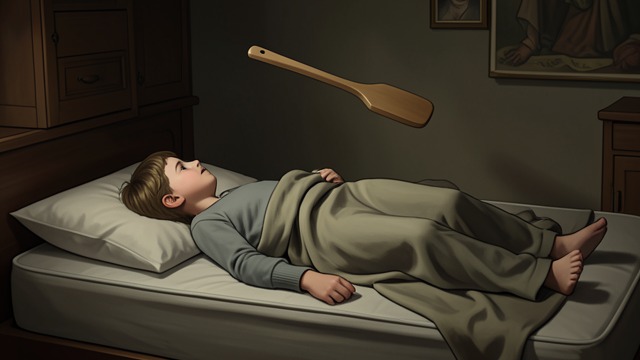
Erika develops blindness, loses control of her head, and becomes unable to respond as she once did. Her condition progresses through spasms and convulsions.
Doctors explain that an inherited metabolic disorder is damaging her brain.
The eugenic distortion
Stahl interprets the disease through racial ideology, calling it a “Jew disease.” His diagnosis mixes personal fear with the very prejudice he later helps institutionalize.
Hartheim Castle
A Deliberate Death
The journey
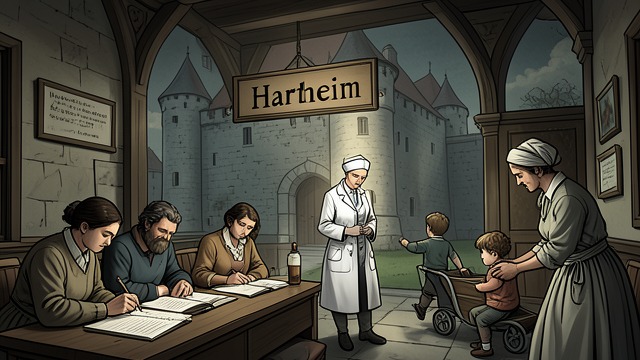
Stahl and Hedda take Erika to Hartheim Castle, where the family has been expected. They sign forms and wait briefly before a nurse takes their child away.
The institution presents the process as orderly, disguising the violence behind administrative efficiency.
The parents’ decision
Erika is killed with drugs. Stahl later insists that it was for the best, but the memory reveals how a policy of killing disabled children can enter a family’s private life.
Hedda’s Death and Stahl’s Silence
Grief Without Resolution
Hedda’s suicide
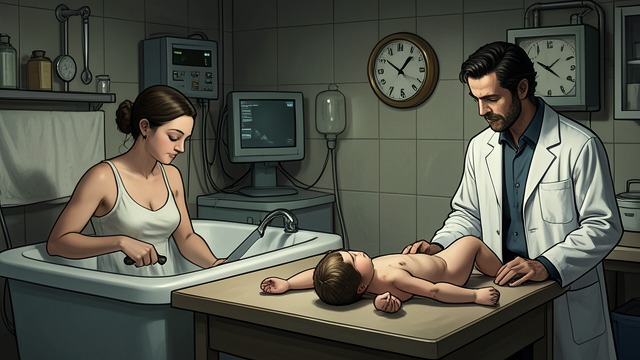
After Erika’s death, Hedda returns home, draws a bath, and cuts her veins. Stahl loses his wife after losing his daughter, leaving him with a catastrophe he rarely discusses.
He carries the story into his work, where scientific language offers a means of avoiding grief.
A confession in the Glass Room
Stahl tells Hana about the family tragedy during the occupation. The confession creates temporary intimacy, but his sorrow does not prevent him from serving a murderous system.
Before Werner Stahl arrives at the Landauer House
During the first six months of her life
After Erika begins losing her abilities
When Erika is about four years old
Days after Erika’s death
